Why Precious Coral Has Been Loved as an Ornament
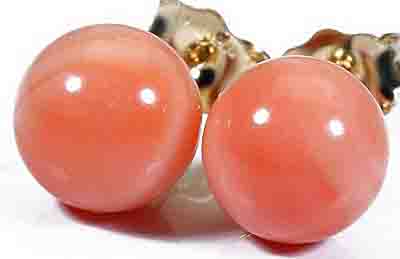
Precious coral is a special type of coral that has long been cherished as an ornamental material for its wide range of colors—from deep red to pure white. Like pearls, it is an organic gemstone created by living organisms, and its gentle, warm quality is a major part of its appeal, offering a softness not found in mineral gemstones.
Its main component is calcium carbonate, with a surface hardness of Mohs 3.5–4. This ideal hardness—neither too hard nor too soft—stimulates the creativity of artisans, allowing it to be crafted into delicate and beautiful pieces such as earrings, necklaces, and pendants.
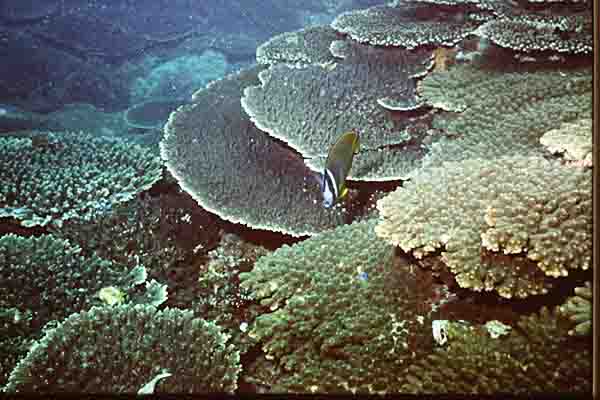
Precious coral is different from reef‑building corals. All corals are formed by tiny polyps (small jellyfish‑like organisms), but reef‑building corals belong to the Hexacorallia group with six tentacles, while precious corals belong to the Octocorallia group with eight tentacles. Octocorals grow in deep seas over long periods, developing into tree‑like structures that eventually become valued as gemstones.
The Four Main Types of Precious Coral
Blood Red Coral — powerful and vibrant (Corallium rubrum)
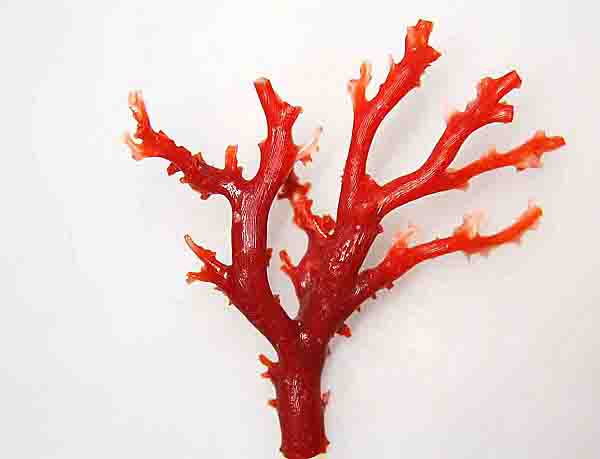
Widely distributed throughout the Mediterranean, from the Italian coast to northwestern Africa. It is relatively small, growing to about 30 cm in height, and is the oldest type of precious coral used by humans.
Red Coral — dignified and elegant (Corallium japonicum)
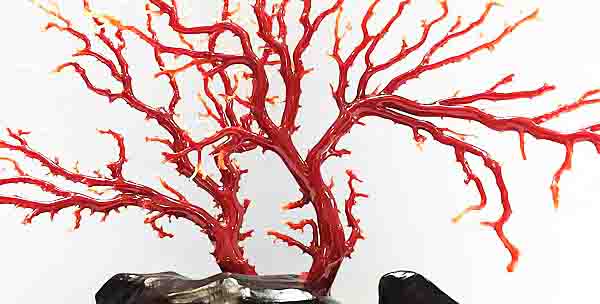
Found in Japanese waters, mainly around Tosa Bay and the Ogasawara Islands. Colonies grow to about 40 cm. It is Japan’s representative precious coral species.
Pink Coral — graceful and charming (Corallium elatius)
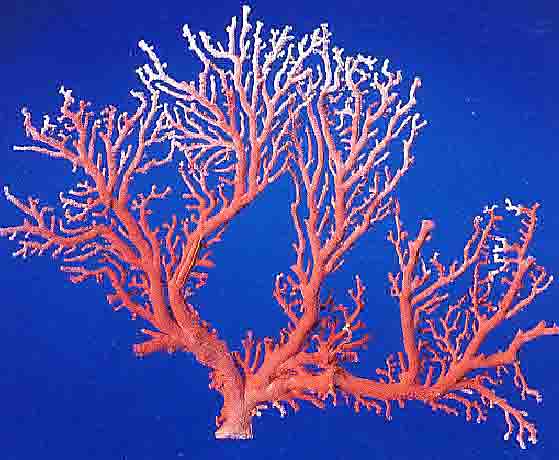
Distributed from the Philippines to the waters off Nagasaki, Tosa Bay, and the Ogasawara Islands. A large species that can exceed 150 cm in height, known for its soft, gentle coloration.
White Coral — pure and mysterious (Corallium konojoi)
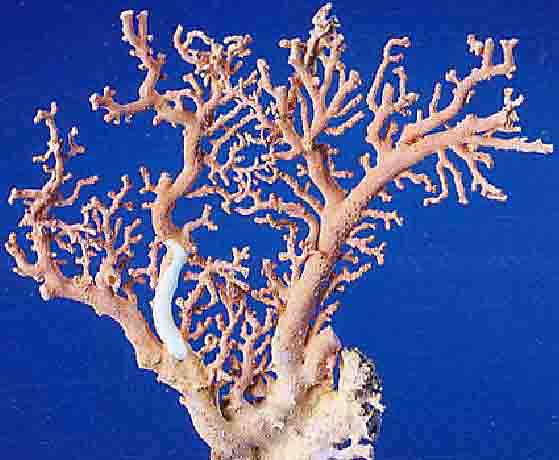
Found from the South China Sea to the waters off Nagasaki and Tosa Bay. It grows to about 50 cm. Its scientific name konojoi honors Ebisuya Konojo, the Japanese fisherman who first collected white coral and greatly contributed to coral fishing. Japanese precious corals live in deep waters over 500 m, making them impossible for divers to see directly.
The Beauty and Warmth of Precious Coral
Blood red, red, pink, and white—precious corals possess colors so beautiful they hardly seem natural. Deep red coral has long been considered a symbol of protection and good fortune, while the soft hues of pink coral evoke elegance and tenderness.
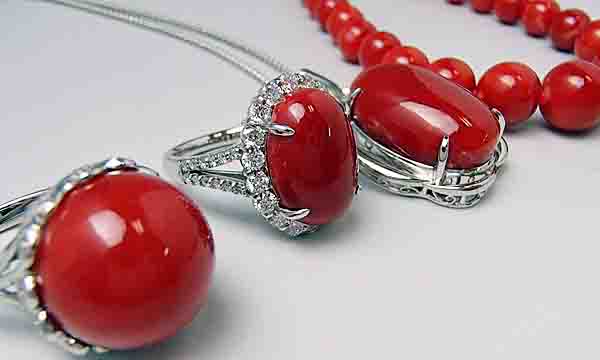
As an organic gemstone like pearls, precious coral has a gentle, warm texture that feels naturally at home against the skin. This subtle “warmth of life” is one of its most distinctive and captivating qualities.
宝石サンゴが装飾品として愛される理由
宝石サンゴは、紅から白まで多彩な色合いを持ち、古くから装飾品として愛されてきた特別なサンゴです。真珠と同じく生物がつくり出す宝石で、鉱物由来の宝石にはない“あたたかみ”が感じられるのが大きな魅力です。
主成分は炭酸カルシウムで、表面硬度はモース硬度3.5〜4。硬すぎず柔らかすぎない絶妙な硬度が、職人の創作意欲を刺激し、イヤリングやネックレス、ペンダントなど、繊細で美しい作品へと姿を変えていきます。
宝石サンゴは、サンゴ礁をつくる造礁サンゴとは別の種類です。サンゴは小さなポリプ(小さなクラゲのような生物)が集まってできていますが、造礁サンゴは6本の触手を持つ六放サンゴ、一方で宝石サンゴは8本の触手を持つ八放サンゴに分類されます。八放サンゴは深海で長い年月をかけて樹枝状に成長し、やがて宝石として扱われる姿になります。
主な宝石サンゴの4種類
紅サンゴは力強く華やかです。(Corallium rubrum)
地中海に広く分布し、イタリア近海からアフリカ北西岸まで生息。高さは約30cmと比較的小型で、最も古くから人類に利用されてきた宝石サンゴです。
赤サンゴは凛とした美しさが魅力。(Corallium japonicum)
日本近海に生息し、土佐湾や小笠原諸島が主な産地。群体の高さは約40cm。日本を代表する宝石サンゴです。
桃色サンゴは可憐で優雅です。(Corallium elatius)
フィリピンから長崎沖、土佐湾、小笠原諸島などに分布。高さ150cm以上にもなる大型種で、淡く優しい色合いが特徴です。
白サンゴは清楚で神秘的。(Corallium konojoi)
南シナ海から長崎沖、土佐湾などに生息。高さは約50cm。学名「konojoi」は、日本で初めて白サンゴを採取し、サンゴ漁に大きく貢献した漁師・戎屋幸之丞(えびすや・こうのじょう)に由来します。 日本の宝石サンゴは水深500m以上の深海に生息するため、ダイバーが直接目にすることはできません。
紅、赤、桃色、白── 宝石サンゴは自然が生み出したとは思えないほど美しい色を持ちます。 特に紅サンゴの深い赤は古くから魔除けや幸福の象徴とされ、桃色サンゴの柔らかな色合いは優しさや上品さを演出します。
宝石サンゴは真珠と同じく生物由来の宝石ですから、鉱物の宝石にはない柔らかく優しい質感があり、肌にのせたときにふっと馴染むような温もりを感じます。 この“生命のぬくもり”こそ、宝石サンゴならではの魅力です。